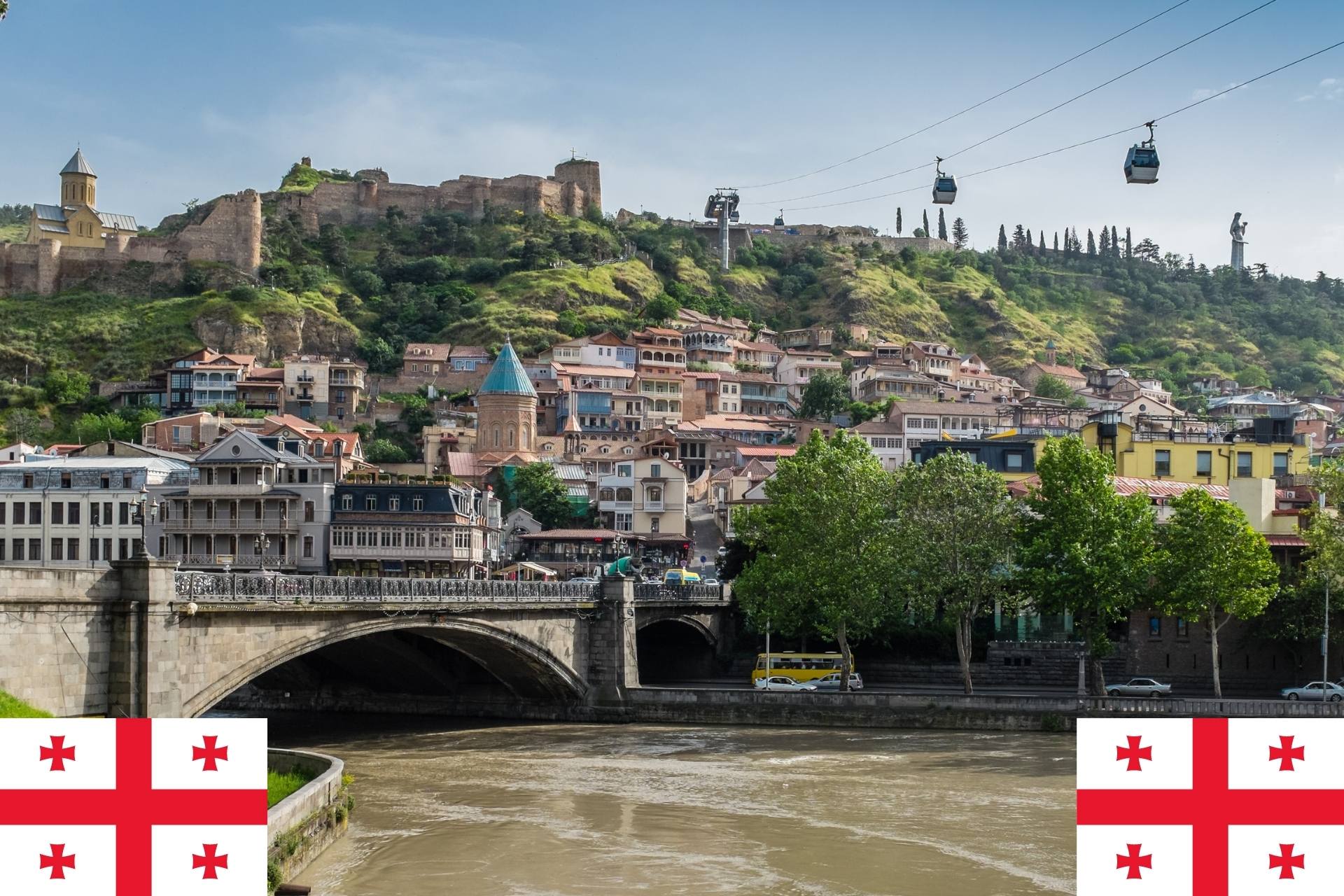
Investing in real estate in Georgia is an attractive proposition. This guide covers the most important topics for anyone considering a property purchase – from where to buy and what to pay, through to yields, legal considerations, and the realities of navigating the market on the ground.
Georgia remains one of Europe’s more affordable capital cities for real estate. Centrally located, fully finished one-bedroom apartments in Tbilisi are available from around $130,000-$150,000 USD, depending on district and finishing standard. In the suburbs, considerably less. Prices have been rising steadily, but the entry point remains low relative to comparable European markets.
What follows covers location, pricing, growth, mortgages, rental yields, and the pitfalls worth knowing before you commit.
Buying property in Georgia? You can also download our “state of the market” Georgia economic indicators PDF, with detailed charts and stats covering market changes through to today.
LAST UPDATED: June 2026
- Georgian Real Estate Market – Top 10 Essential Info Points, At A Glance
- Why Georgia?
- Rapidly Improving Infrastructure
- Where To Buy Property In Georgia (Tbilisi/Batumi)
- Georgian Real Estate Podcast
- Georgian Real Estate: Strong Rental Market, Attractive Rental Yields
- Easy Entry for Foreigners Buying Property In Georgia
- Low Tax Regime: Stamp Duty, Property & Personal Tax
- Difficulties Facing Foreigners Buying Property In Georgia
- Remote Purchasing Options For Real Estate In Georgia
- Banking & Mortgages For Buying Property In Georgia (Europe)
- Ease of Doing Business
- Residency Through Investing in Georgian Real Estate
- Legal Concerns
- Sales Agents vs Real Estate Purchase Assistance services In Georgia (And How ExpatHub Solves The Challenges)
- Download our “State of the Market” PDF
- Real Estate Georgia: Summary
- Free Real Estate Consultation
Georgian Real Estate Market – Top 10 Essential Info Points, At A Glance
- Georgia recorded real GDP growth of 7.5% in 2025 – one of the strongest performances in the region – with growth expected to moderate to around 5-5.5% in 2026, according to ADB and World Bank projections.
- Tbilisi property prices grew modestly from 2016 to early 2022, then surged sharply – some districts posted increases above 35% in 2022. The market has since entered a more measured phase; average price growth in Tbilisi came in at around 8% in 2025, with forecasts for 2026 pointing to single-digit growth of approximately 3-5%.
- Long-term rental yields (6+ months) in Q1 2026 average 7-8% gross across Tbilisi, 6-8% in central districts. Short-term yields vary more widely. Well-managed properties in tourist-corridor districts can reach 12-16%, depending on occupancy and management quality.
- As of mid-2026, typical per m² prices in Tbilisi: $3,500+ in the Old Town (Mtatsminda), $3,000+ in prestigious districts like Vake, $1,800-2,500+ in central districts like Saburtalo, and $1,000–1,500 in outer suburban districts. The average across all building types and standards sits at approximately $1,269-1,350 per m² – new, high-standard units command considerably more.
- Foreigners can purchase non-agricultural real estate in Georgia on the same basis as Georgian citizens. Remote purchasing via Power of Attorney is entirely legal and regularly handled by our legal team.
- Property registration (transfer of title) costs between ₾150-350 GEL (~$50-130 USD) depending on processing speed. Total legal fees for the full purchase process rarely exceed $500-$1,000 USD.
- 0% capital gains tax if selling after 2 years of ownership. Annual property tax amounts to no more than 1% of appraised value – often less, depending on municipality and household income. No additional local or council taxes apply.
- Tbilisi remains among the more affordable European capitals for property investment, though prices have risen considerably since 2022. The gap with Western European cities is still significant.
- Important 2026 update: As of March 1, 2026, the minimum appraised property value required to qualify for temporary legal residency has increased from $100,000 to $150,000. Eligibility is assessed on the official appraisal value not the purchase price or market value.
- Most foreigners can open a personal bank account in Georgia to hold purchase funds. Mortgages are available for non-residents, though conditions are stricter than for Georgian citizens.
Our comprehensive guide to the Georgian real estate market in general, is below.
Buying property in Georgia? For a more in depth analytical report on the market with relevant statistics and charts, download our Georgia economic indicators PDF.
Why Georgia?
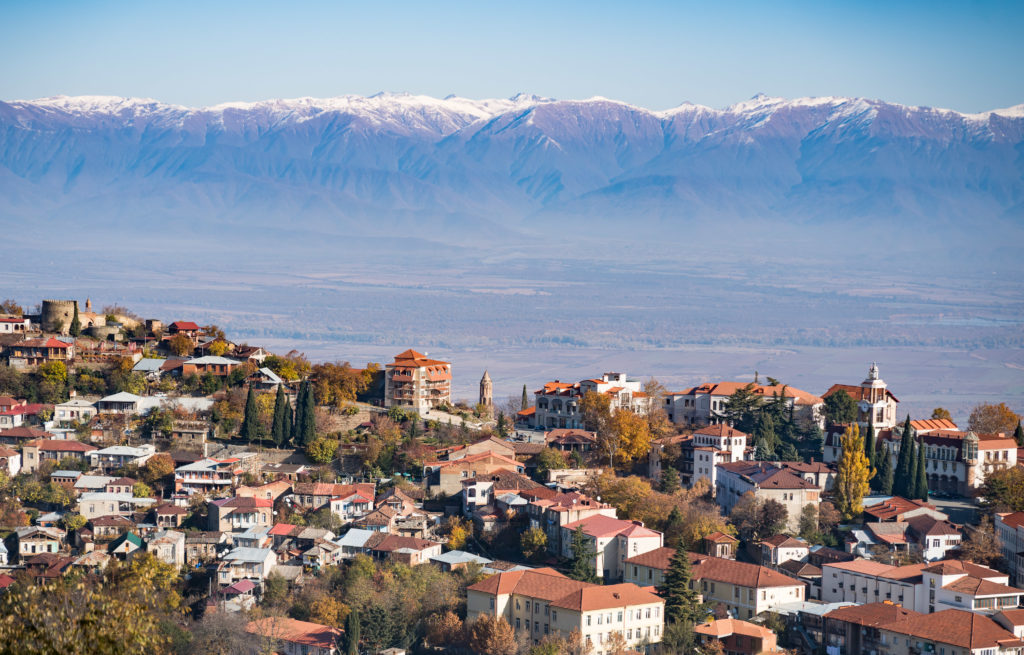
Georgia has a lot going for it beyond the property market – a diverse climate, low cost of living, a food culture that tends to surprise visitors, and mountain landscapes that make it genuinely distinct from other emerging European destinations. Tourism hit record levels in 2024, with over 7.6 million visitors, and continues to grow. Digital nomad and expat communities are well established in Tbilisi, and the country’s tax environment continues to attract those thinking about residency or business registration alongside a property purchase.
Personal income tax is a flat 20%, though special programmes bring that down considerably – 1% for individual entrepreneurs, for example, and business profits are only taxed upon distribution, not annually. Opening a business typically takes two working days, even for foreigners.
Georgia recorded GDP growth of 7.5% in 2025, one of the strongest performances in its recent history, supported by strong private consumption, a booming ICT sector, and rising wages.
Growth is expected to moderate to around 5-5.5% in 2026, according to the ADB and World Bank – still robust by regional and global standards.
Since the pandemic, Georgia’s property market has been on a broadly upward trajectory. A combination of capital appreciation and rental yields continues to make it an attractive destination for buy-to-let investors.
For short-term letting, tourism has well surpassed pre-pandemic levels. For longer-term rentals, both Tbilisi and Batumi continue to benefit from urbanisation and steady expat and digital nomad inflows – over 34,000 digital nomads were registered in Georgia as of early 2025.
Download our PDF of Georgia’s key economic indicators covering the last decade through to today.
Rapidly Improving Infrastructure
In July 2021, Georgian Infrastructure Minister Irakli Karseladze outlined a 10-year development plan covering highway networks, universal water access, modernised waste management, and greater regional development. Work remains ongoing: 818km of highways are under construction or have been completed, including 71 bridges and 47 tunnels, with a total spend of 17 billion GEL (approximately $6 billion USD) on road infrastructure by 2030.
Internet infrastructure has developed significantly over the past decade and is now well-developed in most urban areas. Fibre connections delivering 20-100Mbps are widely accessible in Tbilisi, Batumi, and Kutaisi. Outside major cities, quality varies – worth confirming before committing to a more remote location.
Where To Buy Property In Georgia (Tbilisi/Batumi)
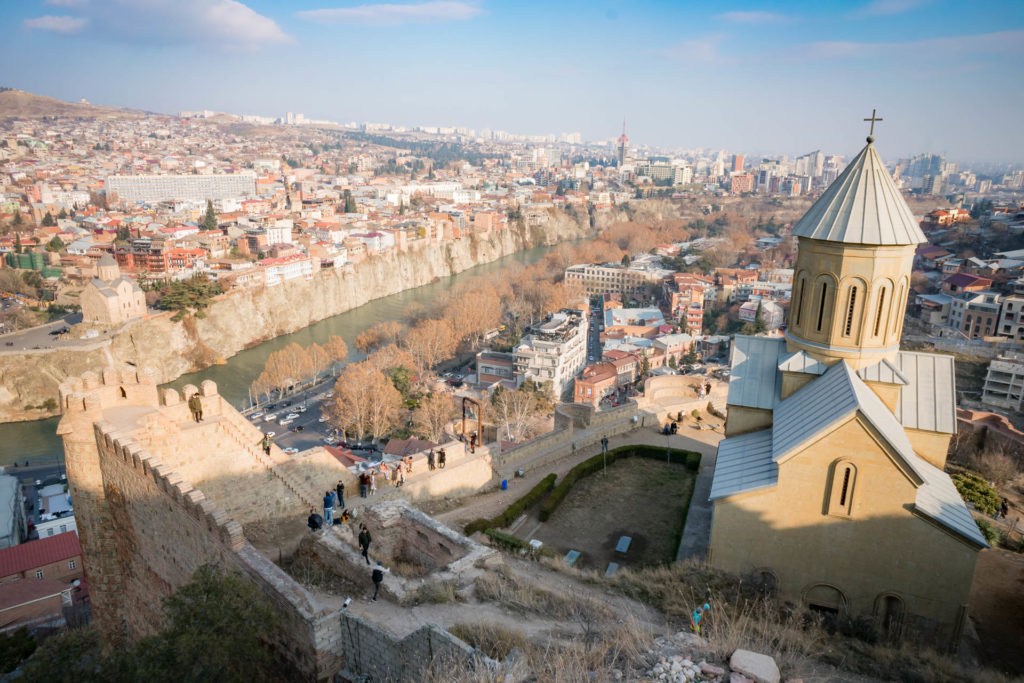
Every experienced investor arrives at the same understanding eventually: you are not just buying a property, you are buying into a location – its momentum, its demand, its trajectory over the years ahead. In Georgia, that truth is unusually transparent.
Property prices rose steadily from 2012 to 2019, dropped roughly 20% in 2020 due to the pandemic, then recovered sharply – posting growth above 35% in select Tbilisi districts through 2022. Since mid-2023, that pace has eased into something more measured. Not stagnation. Consolidation. A market that ran hard, finding its floor, and now tracking more moderate single-digit annual growth. Average price growth across Tbilisi came in at around 8% in 2025. Forecasts for 2026 point to around 3-5%, depending on the supply pipeline and wider geopolitical conditions.
Tbilisi is where the fundamentals are strongest. Roughly a third of Georgia’s population lives there, and rental demand across both short and long-term segments is deep and consistent. For foreign buyers, the central districts – Saburtalo, Vake, Mtatsminda, Vera, Sololaki, Ortachala, Avlabari, and Chugureti – are the core of that opportunity. Vera, Sololaki, and Mtatsminda sit within the tourist corridor; proximity to the old town sustains short-term occupancy with a reliability that is difficult to replicate elsewhere in the city. The broader central districts serve the long-term market: professionals, international residents, and a domestic middle class that continues to urbanise.
Batumi is the second chapter. New-build prices in Batumi sit at around $1,400-1,800 per m² for quality coastal developments, with premium seafront units reaching considerably higher. The leading developers are building to a standard the market previously lacked – large-scale mixed-use coastal towers, professionally managed, with guaranteed rental income available in select cases. Coastline access, build quality, developer track record, and management infrastructure are what separate the credible opportunities from the rest. Batumi’s short-term rental yields remain among the highest in the country – 10-16% for well-located, managed properties.
Kutaisi sits at the value end – prices from around $700 per m², roughly half those of Tbilisi, a different market with different expectations. It is growing as a business hub and increasingly appears on investor radar for those seeking lower entry points.
Georgian Real Estate Podcast
We discuss where to buy and the state of the market, as well as some of the quirks and problems. (3rd party player may take a few seconds to load).
Listen and subscribe on any podcast platform. Just search “Tbilisi Podcast”.
Georgian Real Estate: Strong Rental Market, Attractive Rental Yields
2022 was the most dramatic year the Georgian rental market had seen in some time. The outbreak of conflict in Ukraine brought a sharp inflow of residents and capital, pushing rents up by as much as 100% year-on-year in some cases. That surge softened through 2023, and asking rents in Tbilisi have since corrected – dropping approximately 8% in 2024, and a further 11% in 2025, according to TBC Capital data. By early 2026, average rents in Tbilisi were running at approximately $10 per m² per month, broadly in line with pre-conflict levels.
This rental correction has naturally brought yields down from their 2022-2023 peaks. The average gross rental yield across Georgia in Q1 2026 stood at approximately 7.42%, according to Global Property Guide – with Tbilisi at 7.53% and Batumi at 7.31%. These figures remain attractive by European standards, even after the normalisation.
For short-term letting, well-managed properties in Tbilisi’s tourist districts still deliver meaningfully higher returns. There are approximately 6,500+ active short-term listings in Tbilisi, with median annual revenues around $10,000 and occupancy rates around 63%. Properties in the right locations, managed properly, can reach 12-16% gross yields.
Property management companies are widely available and generally charge around 25% of gross rental income for short-term rentals and 15% for long-term.
Easy Entry for Foreigners Buying Property In Georgia
There are very few restrictions. A non-citizen can purchase non-agricultural real estate on a freehold basis under the same conditions as any Georgian citizen.
Property registrations are processed at Public Service Halls (PSH) located throughout Georgia. The system is efficient – transfers typically complete within four working days, with a same-day option available at additional cost.
The exception is agricultural land, including properties situated on agricultural land, which remains restricted for foreign ownership. Some outer areas of Tbilisi still carry agricultural zoning, and rezoning can be a slow process. This is worth confirming early when viewing any property. If agricultural land is relevant to your situation, it’s worth discussing options at one of our free real estate consultations.
Low Tax Regime: Stamp Duty, Property & Personal Tax
There is no Stamp Duty or equivalent purchase tax in Georgia. The costs associated with buying are minimal.
Property registration costs between ₾150-350 GEL (~$50-130) depending on processing speed. No hidden costs apply.
Annual property tax is governed by the Tax Code of Georgia and amounts to at most 1% of appraised value – often significantly less, depending on municipality and household income.
Selling within two years of purchase attracts a 5% capital gains tax. After two years, no capital gains tax applies.
As a buy-to-let investor, registering as a landlord means paying 5% annual tax on gross residential rental income, or 20% on commercial lettings. Unregistered landlords pay the standard 20% personal income tax rate but may deduct allowable expenses.
Difficulties Facing Foreigners Buying Property In Georgia
Language Barrier & Georgian Business Practices
Getting basic information about a property you’re considering is harder than it should be. Many agents and sellers don’t speak adequate English, and even those who do often lack the context to anticipate what a foreign buyer would consider material information.
Beyond language, the way negotiations are handled can be unfamiliar – sometimes disorienting. Unusual negotiation dynamics and deals collapsing without warning are both features of this market. Some of it edges into scamming; more often it is a difference in business culture. Either way, having a Georgian-speaking expert involved early smooths the process considerably.
The Foreigner Price Problem
Some sellers treat a foreign inquiry as an opportunity to revise the asking price upward. It happens, and the justifications offered are rarely convincing. Having a local Georgian-speaking representative make initial contact, before a seller establishes the buyer’s background, is the most effective way around it.
Unregulated Real Estate Agent Industry
There is no regulatory framework. Anyone can operate as a real estate agent without experience, qualification, or accountability. The quality ranges from genuinely incompetent through to deliberately deceptive, and the buyer has very little recourse once a deal has closed.
Incompetence alone creates real problems. Agents routinely present unverified details as fact, often because they haven’t investigated the property themselves before taking a buyer to view it. Finding out after completion that the “included” parking space was always public street parking is a common example of how this plays out.
Limited Portfolio
This affects all buyers, not just foreign ones. The structure of the Georgian market means most agents operate with a small, fragmented selection of listings. Commission sharing between agents is rare, so even an effective agent works with a constrained pool. The consequence for a buyer is straightforward: you cannot simply find one good agent, hand them your criteria, and wait for results. You will cycle through agents, do significant legwork yourself, and manage the process actively from start to finish.
Remote Purchasing Options For Real Estate In Georgia
Purchasing via a Power of Attorney (PoA) is entirely legal in Georgia and allows the full transaction to be completed without the buyer ever visiting the country. Our legal team manages this process regularly for international clients.
That said, large international transfers carry their own risks, and having a local bank account is generally advisable. For investors whose time is limited, remote purchasing is a practical option – with the right representation in place.
Banking & Mortgages For Buying Property In Georgia (Europe)
Opening a Personal Bank Account
Georgia remains accessible for non-citizens looking to open a personal bank account, though requirements have tightened somewhat in recent years and continue to evolve.
The two dominant banks are Bank of Georgia (BoG) and TBC. Both are listed on the London Stock Exchange and offer multi-currency accounts (GEL, USD, EUR), full internet and mobile banking, and premium-tier services for clients maintaining a minimum balance of approximately 20,000 GEL. Bank of Georgia’s premium service is named Solo; TBC’s is TBC Concept.
Opening an account requires a passport and a short back-office review, typically completing in one to two days. No proof of address or reference letter is required at the basic level, though questions about sources of wealth are common, and documentation may be requested. US citizens are subject to FATCA requirements.
Large incoming transfers – broadly anything above $10,000 USD, though any amount can trigger review – will likely prompt KYC queries. Georgian banks handle these relatively efficiently; verification rarely takes more than a few days once documentation is provided.
Mortgages
Mortgages are available to foreigners through both BoG and TBC. As of 2026, typical conditions for foreign national borrowers include a minimum 30-50% down payment and interest rates starting from approximately 8% for foreign currency loans – GEL denominated loans carry rates above 12%. Terms typically do not exceed 10 years for non-residents.
Conditions vary and foreigners’ terms sometimes differ from those offered to Georgian citizens. Speaking directly with a bank about your specific situation is worthwhile before making assumptions about what you’ll qualify for.
Ease of Doing Business
Georgia has one of the most favourable investment climates in the region. Significant structural reforms have simplified business registration, licensing, construction permits, and tax processes considerably. In 2019, Georgia ranked 6th in the World Bank’s Ease of Doing Business Indicators, up from 115th in 2005.
Opening a business – in person or remotely – typically takes two working days, with a one-time registration fee and no annual renewal requirements.
Residency Through Investing in Georgian Real Estate
Property ownership can serve as a basis for obtaining legal residency in Georgia, subject to meeting the relevant thresholds. Note: the thresholds changed as of March 1, 2026.
Short-Term Residence Permit (property value above $150,000 USD). As of March 1, 2026, the minimum property value required to qualify for Georgia’s property-based residence permit increased from $100,000 to $150,000 – a 50% increase introduced under 2025 immigration reforms. If your total Georgian real estate portfolio carries a certified market value above $150,000 (multiple properties can be combined), this can be used to apply for a renewable annual temporary residence permit for yourself and your dependents. Eligibility is based on market valuation by an accredited appraiser – not the purchase price. If the property is sold or falls below the threshold at revaluation, the permit will not be renewed. Permits obtained under the old $100,000 threshold remain renewable, provided ownership continues.
$300,000 USD Investment Residence Permit. The higher-tier route remains unchanged. A $300,000 investment provides a five-year renewable residence permit for the principal applicant, spouse, and minor children, and opens a fast-track route to permanent residency after five years. The investment does not need to be exclusively in real estate but must be maintained continuously. Holders of this permit are also exempt from the new Special Labour Activity Permit requirements introduced in March 2026, making it the cleaner route for those who also plan to work or run a business in Georgia.
IT Residence Permit (new from September 2025). A new three-year residence permit for technology professionals was introduced in September 2025, requiring at least two years of industry experience and annual income above $25,000. This is skills-based rather than investment-based.
Read more about legal residency here.
Legal Concerns
The real estate acquisition process requires due diligence, and engaging a lawyer to carry it out is essential. By international standards, these costs are modest.
Georgia’s property registration system is well-structured. Every property has a unique cadastral code registered on the national Property Register at the Public Service Halls. All historical information associated with that code – liens, mortgages, previous owners – is recorded on the property extract. Ownership transfers when your passport details are registered as the current owner for the relevant cadastral code.
Sales Agents vs Real Estate Purchase Assistance services In Georgia (And How ExpatHub Solves The Challenges)
The majority of agents here do not operate in the way buyers from Western Europe or North America would expect. A handful do – but the portfolio problem discussed earlier means that even a genuinely competent agent can rarely service a buyer end-to-end. The combination of a good agent with sufficient listings rarely materialises in practice. Expect to be proactive, expect to change agents frequently, and expect to drive most of the process yourself.
Our approach is to work with the market as it is, while giving clients a materially better experience within it. Our Real Estate Purchase Assistance is essentially everything a good buy-side agent would do, backed by a legal team, and without the conflicts of interest that come with commission-from-seller structures.
Here is how the standard agent process plays out — and how we approach it differently:
- Agents list properties on portals like Myhome.ge or SS.ge. Some listings are legitimate; others are fabricated to generate enquiries, or copies of listings the agent has no actual access to sell. Our approach: We sift all listings to your exact requirements and verify them before presenting options. You only review real, relevant properties.
- You contact the agent when you find something of interest. Our approach: We contact them on your behalf. No time spent on your side.
- In roughly 50% of cases, there is no response – particularly if the agent doesn’t speak English. Our approach: We speak Georgian. We filter out non-serious agents from the first interaction.
- Of those who do respond, the property is often “not available” – either because it was never genuinely accessible to that agent, or because it was a fake listing to begin with. Our approach: We locate the original owner or agent directly. We don’t depend on commission-sharing, so we can work with parties that wouldn’t engage with a standard agent.
- If real, the agent sends you whatever listings they happen to have – regardless of fit, and disappears if nothing sells. Our approach: We continue proactively searching based on your requirements. The process doesn’t stall because one agent runs out of options.
- On viewings that do happen, undisclosed issues are common: the building condition doesn’t match the listing, the promised parking space doesn’t exist, the renovation photos were misleading. Our approach: We pre-view buildings and conduct remote video viewings to rule out the obvious time-wasters before you’re involved. We know the questions agents don’t ask.
- If you find something suitable, you may encounter price changes, legal complications, or sellers raising new demands late in the process. Our approach: Our legal team handles due diligence. We negotiate in Georgian. We’ve walked away from completed “Sale Agreed” situations on behalf of clients when due diligence uncovered problems – and we continue the search. Our fee isn’t tied to any particular property, so our incentive is to find you the right one.
Download our “State of the Market” PDF
In our PDF guide, we outline all the essential stats that may influence your decisions about buying real estate in Georgia. From general growth and rental yields, to inflation rates, GDP and other key economic indicators which affect the overall stability and potential in the Georgian real estate market.
All the stats you need, in one place.
You can also get your questions answered, with a free, no obligation consultation.
Real Estate Georgia: Summary
The Georgian market rewards preparation. The fundamentals remain strong – pricing, yields, legal simplicity, and tax treatment all compare favourably to most European alternatives. The friction is on the ground: unregulated agents, limited portfolio, language barriers, and a negotiation culture that takes some navigating.
The market is more mature than it was in 2022. The days of 35% annual price growth are behind it. What remains is a market with solid yield potential, meaningful capital appreciation prospects over a longer horizon, and lower entry costs than almost any comparable European city. Understanding both the opportunity and the friction in advance is most of the work.
Learn About Our Real Estate Purchase Assistance Services
Free Real Estate Consultation
Considering buying property in Georgia? We offer a free 30-minute consultation.
Our consultation is an information call, not a sales call. English language consultation only.
This consultation is available to everyone – even if you have had a free legal / tax / immigration consultation with us in the past.
—————————–
If you prefer to go it alone in the research and selection process, we still can assist with the essential due diligence legal work..
